
Properly spacing shelves is crucial for maximizing both their functionality and aesthetics.
Here are some guidelines to help you determine the ideal spacing:
1. Determine the Use of the Shelves
- For Books: If you plan to store primarily books, a spacing of 20 to 30 cm (8 to 12 inches) is generally sufficient for most books. For larger books or albums, you may need more space, around 30 to 40 cm (12 to 16 inches).
- For Dishes or Decoration: In a kitchen or for decorative items, spacing can vary widely depending on the height of the objects. Measure your tallest items to determine the minimum necessary spacing, adding a few centimeters for ease of access and display.
2. Consider Aesthetics
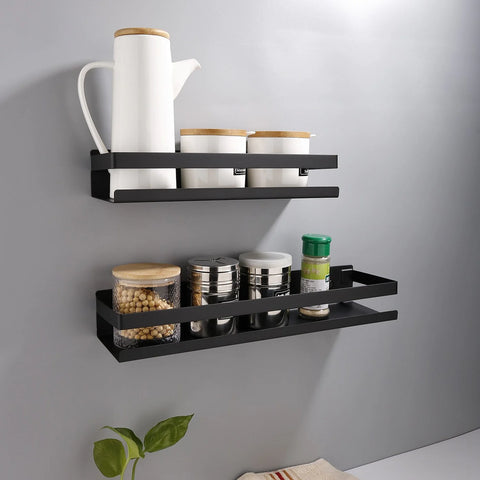
- Uniformity vs. Variation: Uniform spacing between shelves can create a consistent and structured look, ideal for a bookcase or organized storage. For a more dynamic and personalized look, consider varying the spacing based on the objects displayed on each shelf.
- Visibility: Ensure that the spacing allows for good visibility and enhancement of the displayed objects, especially if the shelves serve as a showcase for decorative items or collections.
3. Adapt to Available Space
- Ceiling Height: The total height of your space can influence shelf spacing. In rooms with high ceilings, you can allow for larger spacing without the overall arrangement appearing disproportionate.
- Room Size: In a small space, reduced spacing can help maximize storage without visually overwhelming the room.
4. Use Adjustable Shelves
- Flexibility: Adjustable shelves offer the greatest flexibility, allowing you to adjust spacing according to your current and future needs. This is an ideal option if you plan to regularly change the displayed items.
5. Planning and Measurement
- Measure and Mark: Before fixing your shelves, use a tape measure and a level to mark the locations on the wall. This will help you visualize the spacing and adjust as needed before final installation.
- Consider Weight: Keep in mind the weight of the objects you plan to place on the shelves. Spacing may need to be adjusted if the shelves need to support heavy loads to avoid any risk of sagging.
By following these tips, you can create a storage and display space that is not only functional but also adds to the aesthetics of your room. Appropriate shelf spacing can make all the difference in the organization and presentation of your favorite items.