
Arranging shelves on a wall to create a space that is both functional and aesthetically pleasing requires a bit of planning.
Here are some tips to guide you through the process:
1. Determine the Purpose
- Functional Use: If the shelves are mainly for storage (books, dishes, office supplies), functionality takes precedence over aesthetics. Make sure the spacing is suitable for the objects to be placed there.
- Decoration: For decorative use, play with different heights and widths to create a visual focal point.
2. Measure the Available Space
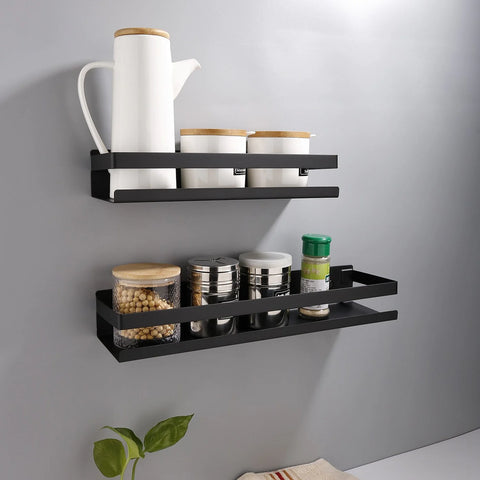
- Before buying or placing shelves, precisely measure the available wall space. This will help you determine how many shelves can be installed and how far apart they should be spaced.
3. Choose a Layout Scheme
- Symmetrical: For a more formal or traditional look, opt for a symmetrical layout, where shelves are uniformly aligned with each other.
- Asymmetrical: For a more modern and dynamic effect, consider an asymmetrical layout, playing with different shelf lengths and positions.
4. Consider Vertical and Horizontal Spacing
- Vertical Spacing: The standard spacing between two shelves varies from 25 to 30 cm (10 to 12 inches), but this can be adjusted depending on the height of the objects to be displayed.
- Horizontal Spacing: Make sure to leave enough space between shelves horizontally, especially if they don't extend across the entire width of the wall.
5. Use a Level
- For a successful installation, it is crucial that the shelves are perfectly horizontal. Use a level to check each shelf before definitively fixing it.
6. Vary Heights for More Dynamism
- If you are displaying objects of different heights, adjust the spacing between shelves accordingly. This will prevent the space from appearing too uniform and will add visual interest.
7. Consider the Maximum Load
- Take into account the weight each shelf will need to support. Ensure that the supports and type of fastening are suitable to avoid any risk of sagging or falling.
8. Create a Focal Point
- For decorative arrangements, choose an object or collection of objects as a central focal point and arrange other elements around it to draw the eye to this point.
9. Balance Decorative Elements
- If you are placing decorative objects on the shelves, make sure to visually balance the composition. Alternate heights, textures, and colors to create harmony.
By following these steps, you can create a shelf arrangement that not only meets your functional needs but also adds an aesthetic touch to your living space.